
Complete Guide to Automated Tourism Booking Workflows
A booking comes in for a three-day hiking tour departing in two weeks. You send the confirmation email, add a reminder to follow up about payment in three days, make a note to send packing list information a week before departure, and set another reminder to request a review after the tour. Then another booking arrives, and you repeat the process.
By the third or fourth booking of the day, something gets missed. A payment reminder goes out late. A guest arrives unprepared because the pre-trip information never reached them. A review request sits in your drafts folder, unsent.
The challenge isn’t remembering to communicate with guests. It’s doing so consistently, at the right time, for every single booking, while also handling new enquiries, managing current tours, and running the business.
This is the operational reality that makes automated booking workflows valuable for tourism operators.
What Booking Workflow Automation Actually Means
An automated booking workflow is a sequence of scheduled communications triggered by a specific event—usually when a booking is confirmed. Once set up, the workflow runs automatically for every booking without requiring manual intervention.
For a tour operator, this might mean that when you mark a booking as “confirmed” in your system, the following happens automatically:
- A confirmation email sends immediately with booking details
- A payment reminder sends three days later if using installment plans
- Pre-trip information (packing list, meeting point, what to expect) sends seven days before departure
- A final reminder with logistics sends 24 hours before departure
- A review request sends 48 hours after the tour concludes
Each step triggers at the specified time without requiring you to remember, schedule, or manually send anything.
This differs from simply using email scheduling tools. Workflow automation responds to actions within your system, tracks whether recipients opened messages or clicked links, and can adjust based on customer behaviour.
Why Tourism Operations Need Different Workflows Than Other Industries
Tourism and travel have distinct characteristics that make booking workflow automation particularly effective:
Time-Sensitive Information
Pre-trip information matters more when delivered closer to the departure date. Sending packing lists four weeks in advance means guests will forget or lose the information. Sending them three days before ensures the information is fresh when guests actually pack.
Multi-Touch Communication Needs
Unlike purchasing a product where one confirmation suffices, tourism bookings require multiple communications: confirmation, payment details, preparation information, logistics, and post-experience follow-up. Automating these touchpoints ensures consistency.
Seasonal Volume Fluctuations
Adventure operators and seasonal businesses face periods where booking volume spikes dramatically. Manual processes that work during quiet months become unsustainable during peak season. Automated workflows handle the increased volume without additional administrative burden.
Guest Preparation Impacts Experience
When guests arrive properly prepared (correct gear, right expectations, necessary documents), the experience runs smoother. Automated pre-trip communication ensures every guest receives the same comprehensive preparation information.
Core Workflow Types for Tourism Operators
Different booking scenarios require different workflow structures. Here are the primary types tourism operators implement:
Booking Confirmation Workflows
Triggered immediately when a booking is confirmed, these workflows handle:
- Confirmation delivery – Sends booking details, reservation number, and what happens next
- Calendar integration – Adds the booking to the guest’s personal calendar
- Receipt documentation – Delivers payment receipts or invoices
- Welcome messaging – Sets expectations and builds excitement for the upcoming experience
For boutique hotels, this workflow might include pre-arrival questions about dietary requirements, arrival time, or special occasions being celebrated.
For safari operators, it might include health and vaccination information required for the destination.
Payment Management Workflows
When bookings involve deposits and installment payments, automated workflows manage the reminder sequence:
- Initial deposit confirmation – Acknowledges payment received and outlines remaining balance
- Payment reminders – Sends scheduled reminders before payment deadlines
- Final payment confirmation – Acknowledges full payment and transitions to pre-trip communication
- Overdue follow-up – Sends gentle reminders if payments are missed
The workflow tracks payment status and adjusts messaging accordingly. Guests who’ve paid in full don’t receive payment reminders; those on installment plans receive appropriately timed prompts.
Pre-Experience Preparation Workflows
These workflows deliver information guests need before arrival, scheduled at optimal intervals:
For adventure and activity operators:
- Equipment lists and gear recommendations (7-10 days before)
- Weather forecast and clothing guidance (3-5 days before)
- Meeting point details and arrival instructions (24-48 hours before)
- Emergency contact information and final logistics (day before)
For accommodation providers:
- Check-in process and arrival instructions (3-4 days before)
- Local recommendations and area highlights (2-3 days before)
- Final arrival confirmation and contact details (day before)
For multi-day tours and safaris:
- Comprehensive itinerary and day-by-day overview (14 days before)
- Packing lists and health/safety requirements (10 days before)
- Travel documents checklist (7 days before)
- Final briefing and meet-up details (2-3 days before)
The key is spacing information delivery so guests aren’t overwhelmed while ensuring they receive everything needed at the right time.
Post-Experience Engagement Workflows
After the booking concludes, workflows shift to feedback collection and relationship building:
- Thank you message – Sends 24 hours after experience completion
- Review request – Sends 48-72 hours after completion, when the experience remains fresh
- Photo sharing invitation – If applicable, requests guests share photos or tag your business
- Future offer introduction – After appropriate interval, presents options for returning guests
- Anniversary or milestone reminders – For businesses focused on repeat bookings, sends seasonal reminders
These workflows transform one-time bookings into ongoing relationships.
Cancellation and Rescheduling Workflows
When guests cancel or request date changes, automated workflows manage the administrative process:
- Cancellation confirmation – Acknowledges the cancellation and explains refund policy
- Refund processing – Sends updates when refunds are processed
- Rebooking invitation – After appropriate interval, invites guests to rebook for different dates
- Alternative offering – Suggests other experiences or options that might suit changed circumstances
While cancellations are disappointing, professional handling through automated workflows maintains goodwill and keeps future booking options open.
Tourism AI Community Learning
Our weekly AI Business Mastermind is a FREE dedicated space for tourism professionals to collaborate on real-world AI challenges and build collective intelligence. Join us this week to share insights and take away practical solutions you can use immediately.

Building Effective Workflow Sequences: Practical Considerations
Creating workflows that feel personal rather than automated requires attention to specific elements:
Timing and Cadence
The interval between messages matters as much as the content. Too frequent, and guests feel overwhelmed. Too sparse, and important information arrives too late.
Most tourism operators find success with:
- Immediate confirmation (within minutes of booking)
- Payment reminders 3-5 days before deadlines
- Pre-trip information 7-10 days before arrival
- Final logistics 24-48 hours before arrival
- Post-trip follow-up 2-3 days after completion
These intervals can be adjusted based on booking lead time. A guest booking three months in advance receives different timing than someone booking three days before departure.
Personalization Elements
Automated workflows work best when they don’t feel automated. Personalization includes:
- Using guest names and booking-specific details
- Referencing the specific tour, destination, or accommodation booked
- Adjusting language based on booking type (solo traveler vs. group, domestic vs. international)
- Including relevant information based on guest data (first-time guest vs. returning, specific interests noted during booking)
The workflow might be automated, but the message should read as though written specifically for that guest.
Channel Selection
Different messages warrant different communication channels:
Email works well for:
- Detailed itineraries and comprehensive information
- Documents and attachments (receipts, vouchers, guides)
- Content guests might reference multiple times
SMS works well for:
- Time-sensitive reminders and urgent updates
- Short confirmations and quick updates
- Last-minute logistics or changes
- Messages requiring immediate attention
WhatsApp (where commonly used) works well for:
- Conversational follow-ups
- Quick questions and answers
- Building rapport with international guests familiar with the platform
Most effective workflows use multiple channels strategically rather than sending everything via one method.
Conditional Logic and Branching
Sophisticated workflows adjust based on guest responses or behaviors:
If a guest opens the pre-trip email and clicks the packing list link, the workflow continues as planned. If they don’t open the email after 48 hours, the workflow sends a follow-up via SMS ensuring they received the information.
If a guest responds positively to initial feedback, the workflow directs them to public review platforms. If the initial response is negative, the workflow routes them to private feedback where concerns can be addressed before becoming public reviews.
This conditional logic ensures workflows respond appropriately to individual circumstances while still running automatically.
Workflow Implementation: The Technical Reality
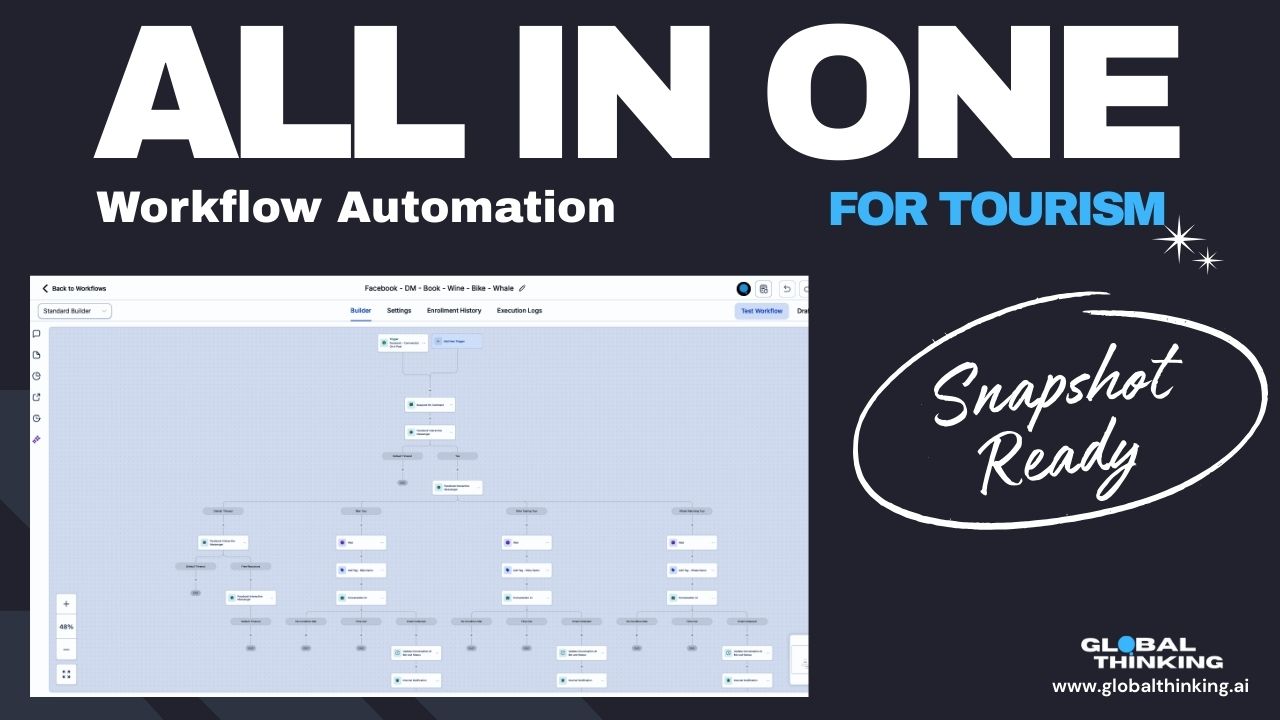
Understanding what workflows can do differs from actually implementing them. Most tourism operators work with platforms like GoHighLevel that provide workflow builders with visual interfaces—you can see the sequence of steps and how they connect.
Building a workflow typically involves:
Defining the trigger – What event starts the workflow? (Booking confirmed, payment received, specific date reached)
Mapping the sequence – What communications happen and when? This includes drafting message content, setting time delays, and choosing channels.
Setting conditions – What circumstances change what happens next? (Payment status, guest responses, booking type)
Testing thoroughly – Running test bookings through the workflow to ensure messages send correctly, timing works as intended, and personalization displays properly.
Monitoring performance – Tracking open rates, response rates, and whether workflows achieve their intended goals (payments received on time, guests arriving prepared, reviews submitted).
This is where tourism-specific implementation support proves valuable. A platform might offer workflow capabilities, but knowing which workflows tourism operators actually need, how to structure them effectively, and what content resonates with guests requires industry knowledge.

Common Workflow Mistakes and How to Avoid Them
Even with automation capabilities, certain mistakes undermine effectiveness:
Over-Automating to the Point of Impersonality
Workflows should handle routine communication, not replace human interaction entirely. If a guest asks a question, a human should respond. If something goes wrong, personal intervention matters more than an automated message.
The goal is freeing your team from repetitive tasks so they can focus on meaningful guest interactions, not eliminating human contact.
Sending Generic Content That Doesn’t Reflect Your Brand
Default templates from software platforms rarely reflect how your business actually communicates. Effective workflows use your voice, your language, and your brand personality. A laid-back adventure tour operator sounds different from a luxury safari company; workflows should reflect that distinction.
Failing to Update Workflows When Operations Change
If you change your meeting point, update tour inclusions, or modify cancellation policies, workflows must reflect these changes. Outdated automated messages create confusion and undermine guest confidence.
Not Monitoring Whether Workflows Actually Work
Automation isn’t “set and forget.” Regular monitoring ensures emails aren’t going to spam folders, SMS messages are delivering, links work correctly, and guests are receiving information as intended.
Creating Workflows That Don’t Account for Edge Cases
What happens when someone books two days before departure and your workflow assumes seven days lead time? When payment methods fail? When guests need to reschedule?
Effective workflows include contingencies for common variations while still allowing manual intervention for truly unique situations.
The ROI of Workflow Automation: What Actually Changes
It’s tempting to claim specific percentage improvements, but the real value of workflow automation shows up in how your operation functions day-to-day:
Reduced Administrative Time
Tasks that previously required hours of manual work (sending confirmations, payment reminders, pre-trip information) happen automatically. This time can be redirected to higher-value activities: improving tour experiences, developing new offerings, or handling complex guest requests.
Consistency Across All Bookings
Every guest receives the same quality of communication regardless of how busy you are. During peak season, when manual processes would start failing, automated workflows maintain the same standard.
Fewer Last-Minute Issues
When pre-trip information reaches guests reliably and on time, they arrive better prepared. Fewer guests show up with wrong gear, missing documents, or unclear expectations.
Higher Review Submission Rates
Automated review requests sent at optimal times generate more responses than sporadic manual requests. Building a robust review profile happens through consistent effort over time.
Improved Cash Flow
Automated payment reminders reduce late payments and the time you spend chasing deposits and final balances.
Scalability Without Proportional Staff Increases
Workflows enable handling more bookings without needing to hire additional administrative staff proportionally. A team of three might manage double the booking volume with effective automation.
These improvements compound over months and years, creating operational capacity that didn’t exist before.
Getting Started: Where Most Operators Begin
Building a complete suite of automated workflows can feel overwhelming. Most tourism operators find success starting with one or two fundamental workflows:
Start with booking confirmation workflows. These provide immediate value and are relatively straightforward to implement. Every booking needs confirmation; automating this process creates quick wins.
Add payment reminder workflows next. If you handle deposits and installments, automating payment reminders improves cash flow and reduces manual tracking.
Then build pre-trip information workflows. These typically deliver the most noticeable improvement in guest preparation and experience quality.
Finally, implement post-trip engagement and review workflows. These support long-term reputation building and repeat business.
Each workflow can be built, tested, and refined before moving to the next. This incremental approach prevents overwhelm and allows learning what works for your specific operation.
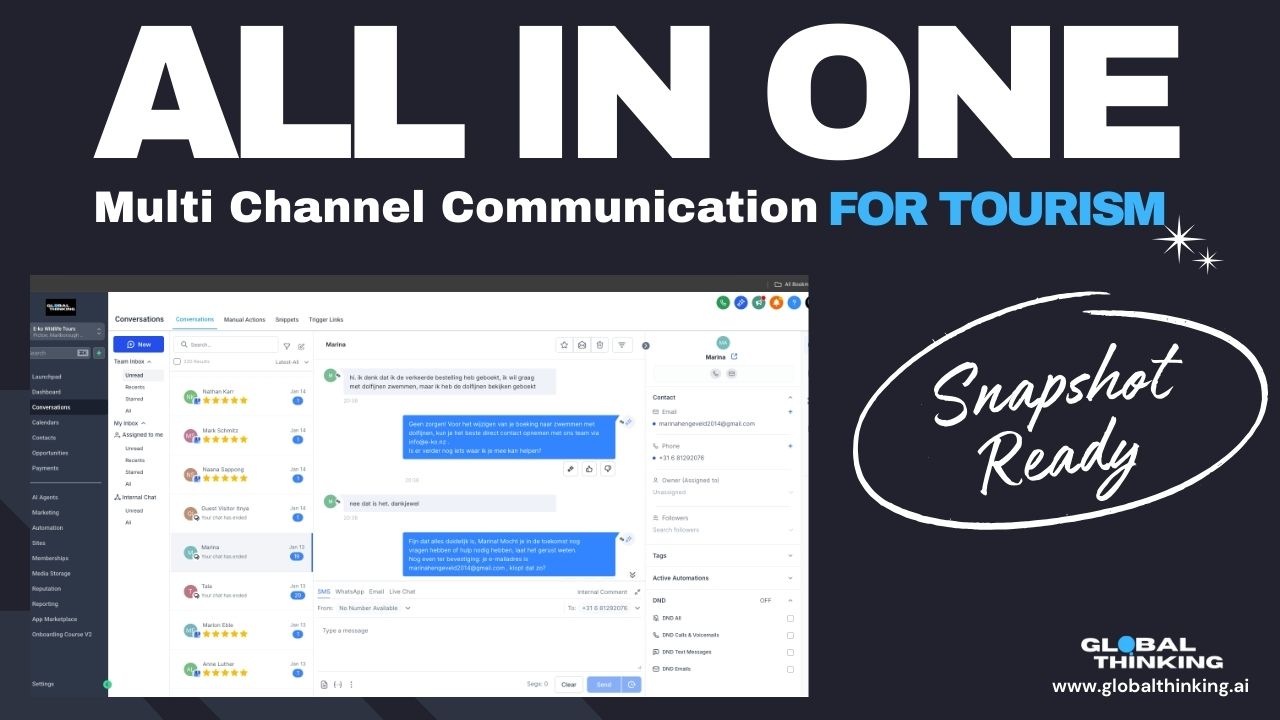
How GlobalThinking AI Supports Workflow Implementation
Creating effective booking workflows requires both technical platform knowledge and understanding of tourism operations. GlobalThinking AI approaches workflow implementation by:
Starting with your current booking process – Understanding how bookings flow through your operation now, where manual steps exist, and what communication currently happens.
Mapping tourism-specific workflow templates – Providing proven workflow structures designed for tour operators, accommodation providers, and experience businesses as starting points.
Customizing content and timing – Adapting workflows to match your brand voice, specific offerings, and operational requirements.
Building conditional logic – Creating workflows that respond appropriately to different booking types, guest behaviors, and circumstances.
Testing and refinement – Running workflows through test scenarios before going live, then monitoring performance and making adjustments based on real results.
The GlobalThinkingApp provides the technical infrastructure for automation, while implementation support ensures workflows actually function effectively for tourism operations.
The Bigger Picture: Workflows as Operational Infrastructure
Automated booking workflows aren’t just about saving time on repetitive tasks. They represent a fundamental shift in how tourism operations function—from reactive manual processes to proactive automated systems.
When workflows handle routine communication reliably, operators gain capacity to focus on what automation can’t do: designing better experiences, solving complex guest needs, and building genuine relationships.
The operators who implement workflow automation effectively don’t just save time. They create more consistent guest experiences, reduce operational stress, and build foundations for sustainable growth.
Ready to implement automated booking workflows for your tourism operation? GlobalThinking.ai specializes in GoHighLevel implementation for tour operators, hotels, and experience providers, with pre-built workflow templates designed specifically for travel businesses.
← Back to – The Tourism Growth Engine – Mastering GoHighLevel in the Travel Industry
Block "6849" not found
