
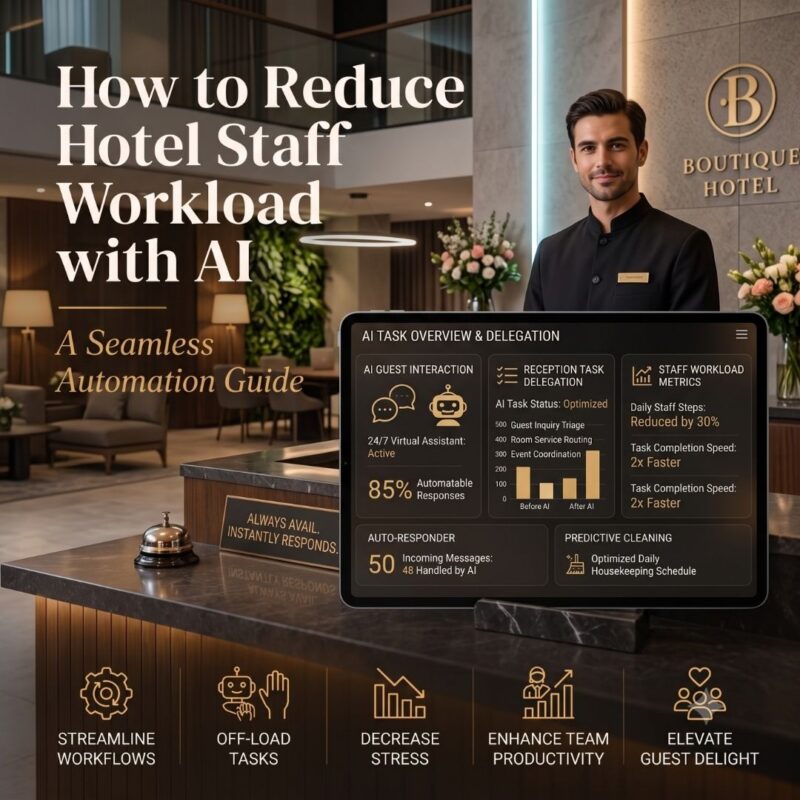
How to Reduce Hotel Staff Workload with AI
Staffing shortages remain a constant challenge for boutique hotels. Existing teams often absorb far too much manual work. Our complete Hotel Operations Automation Software blueprint addresses workload across every section. This guide focuses specifically on reducing daily staff burden. Below, we outline the highest-impact automation opportunities.
Which Daily Tasks Create the Heaviest Staff Burden?
Summary: Guest messaging, manual check-ins, and review requests create the heaviest daily workload for hotel staff.
Responding to repetitive guest questions consumes significant staff time. Manual check-in processes add further pressure during arrivals. Chasing guests for reviews after checkout takes even more effort. These three tasks together dominate a typical shift. Addressing them first delivers the fastest workload relief.
How Does the Unified Inbox Cut Messaging Workload?
Summary: The Omnichannel Unified Inbox automates routine replies, cutting manual messaging workload significantly for staff.
Staff previously answered the same questions dozens of times daily. Automated replies now handle these routine questions instantly. Only complex or unusual requests reach a human staffer. This filtering effect meaningfully reduces total messaging volume. Staff time gets reserved for conversations that truly need it.
Can Task Routing Prevent Staff Burnout?
Summary: Internal Staff Task Routing distributes work evenly, preventing any single staffer from becoming overloaded.
Uneven task distribution often burns out your best employees. Task routing assigns work based on role and availability. No single staffer absorbs an unfair share of requests. This balance protects morale across the entire team. Sustainable workloads also reduce costly staff turnover over time.
Does Automation Reduce the Need for Overtime Hours?
Summary: Automated workflows handle after-hours tasks, reducing reliance on costly staff overtime shifts.
Late-night guest inquiries traditionally required an on-call staffer. Automated messaging and virtual assistance now cover these hours. Fewer overtime shifts get scheduled as a direct result. Labor costs drop while guest service quality stays consistent. This creates real savings without sacrificing responsiveness.
How Does Reduced Workload Improve Guest Service Quality?
Summary: Lighter staff workloads translate into more attentive, higher-quality guest interactions during every shift.
Overworked staff struggle to deliver genuinely attentive service. Automation removes repetitive tasks from their daily plate. Staff then have real bandwidth for meaningful guest interactions. Service quality naturally improves under these lighter conditions. Guests notice the difference in tone and attentiveness immediately.
Giving Your Team Room to Breathe
Reducing workload is not about replacing hospitality staff. It is about removing tasks that do not need a human. GlobalThinkingApp automates the repetitive work across every department. Staff then focus on what genuinely matters most. Revisit the full Hotel Operations Automation Software blueprint for the complete operational picture.
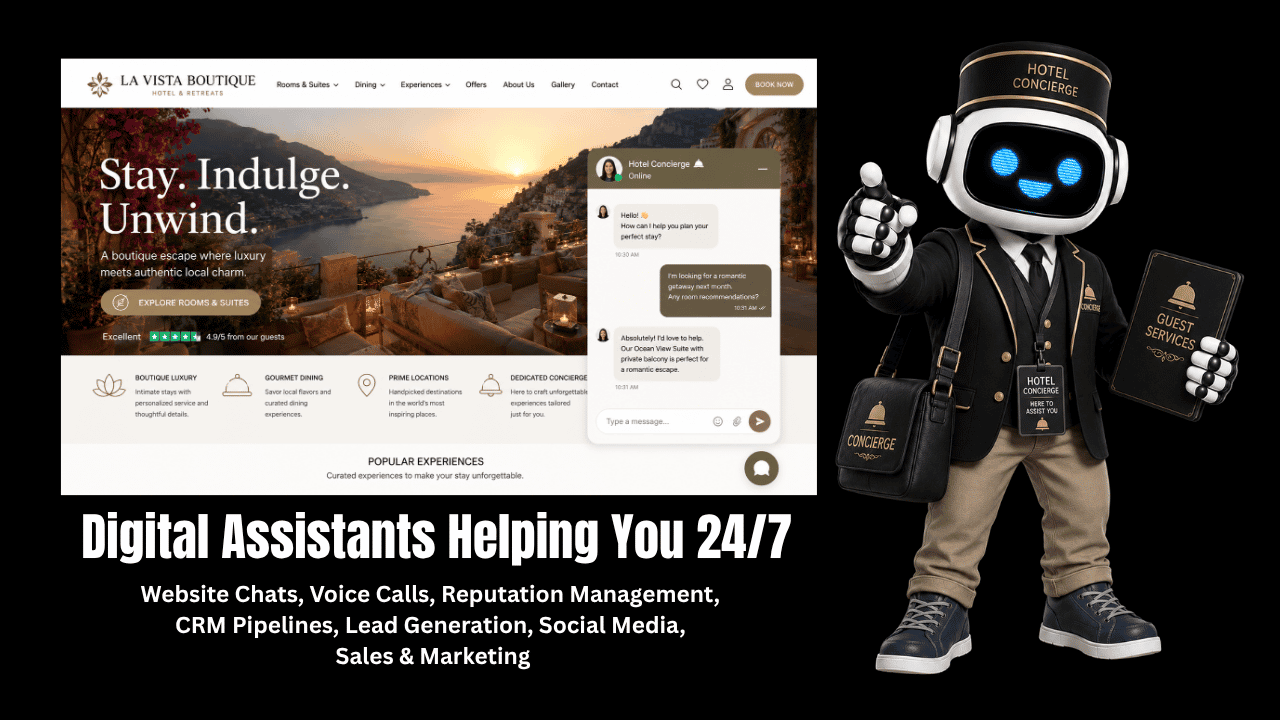
More Than Just A ChATbot on YOur Website!
Digital Assistants Helping You Run Your Hotel or B&B 24/7
Master Series Navigation
- Pillar Hub: Hotel Operations Automation Software
- Spoke 1: Best AI Concierge for Small Hotels
- Spoke 2: How to Increase Direct Hotel Bookings
- Spoke 3: Hotel Guest Messaging Platform WhatsApp
- Spoke 4: Independent Hotel PMS Integration Tools
- Spoke 5: Contactless Check-In Software for Hotels
- Spoke 6: Automate Front Desk Operations
- Spoke 7: Hotel Room Upgrade Upsell Software
- Spoke 8: Reduce Hotel Staff Workload with AI — (You are here)
- Spoke 9: 24/7 Virtual Assistant for Hotel Websites
- Spoke 10: Automated Review Generation for Small Hotels
